Renew Your Building's Roofing Protection
Commercial Roof Replacement in Denver, CO
Explore replacement options for your commercial building. Request a Roofing Estimate
Replace an Aging Roof With a Practical Long-Term Solution
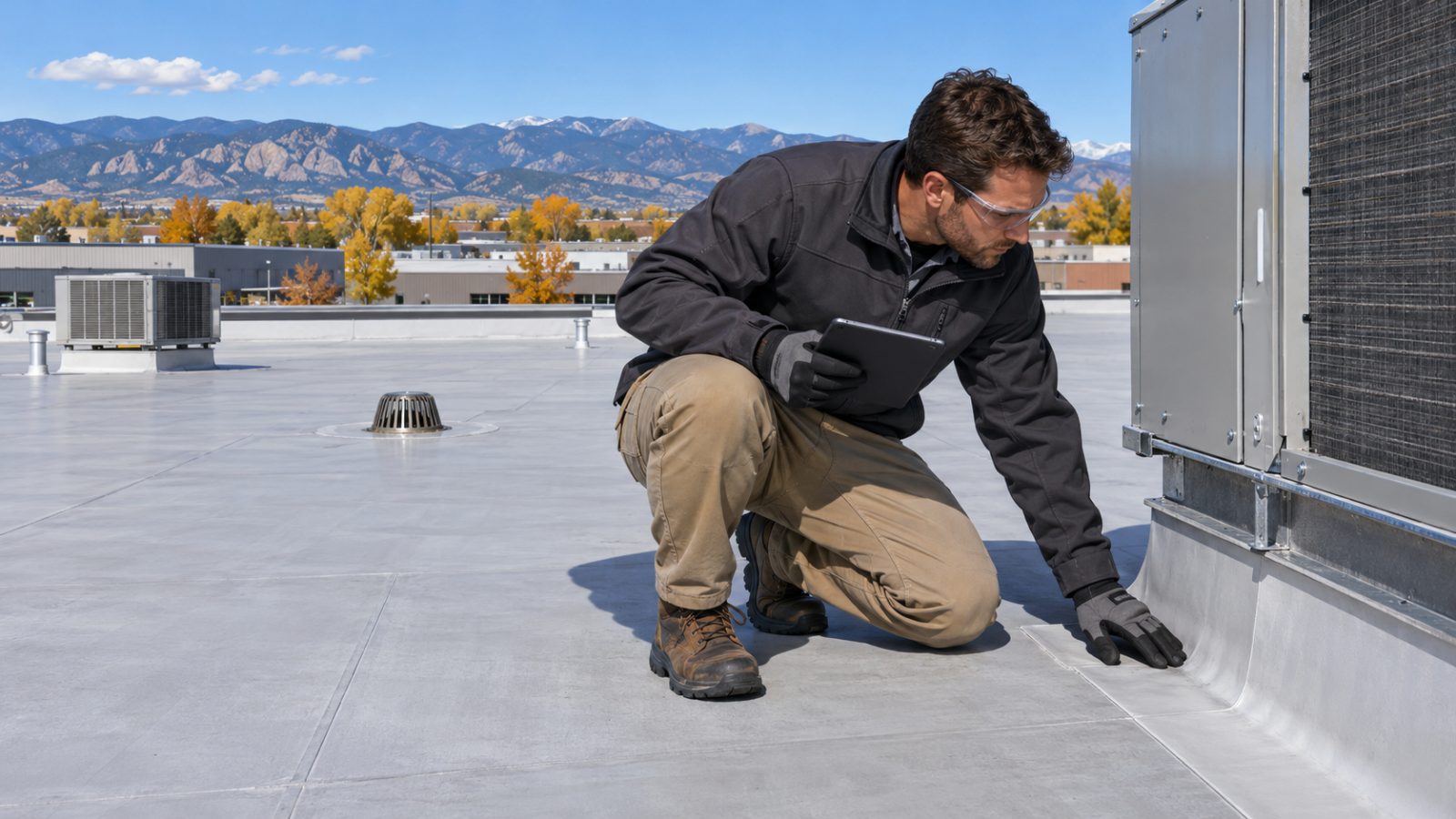
Commercial roof replacement becomes necessary when an existing roofing system can no longer provide dependable protection through reasonable repairs. Persistent leaks, widespread membrane deterioration, saturated insulation, and recurring failures can all indicate that replacement deserves consideration.
Denver Commercial Roofing Pros helps commercial property owners evaluate replacement options based on the condition of their building. The goal is to select a roofing system that addresses existing problems while meeting the property's operational and environmental requirements.
Signs Your Commercial Roof May Need Replacement
Repeated leaks in different areas of the building may indicate that deterioration extends beyond isolated damage. Brittle roofing materials, extensive seam failures, widespread blistering, and moisture beneath the membrane are additional warning signs.
The age of a roof is useful information, but it does not determine replacement needs by itself. Installation quality, maintenance history, weather exposure, and the condition of concealed components all influence remaining serviceability.
Planning Beyond the Roofing Membrane
A replacement project provides an opportunity to evaluate insulation, drainage, decking, flashing, and equipment curbs. Addressing these components can help prevent existing problems from carrying over into the new roofing system.
Property owners should also consider applicable building requirements, roof assembly compatibility, and the impact of construction on tenants and employees.
Denver Commercial Roofing Pros Is Proud to Serve Denver, CO
Important Commercial Roof Replacement Considerations
A replacement roofing system must work as a complete assembly. Material selection is important, but the condition and design of the underlying components deserve equal attention.
Existing Roof Removal and Assessment
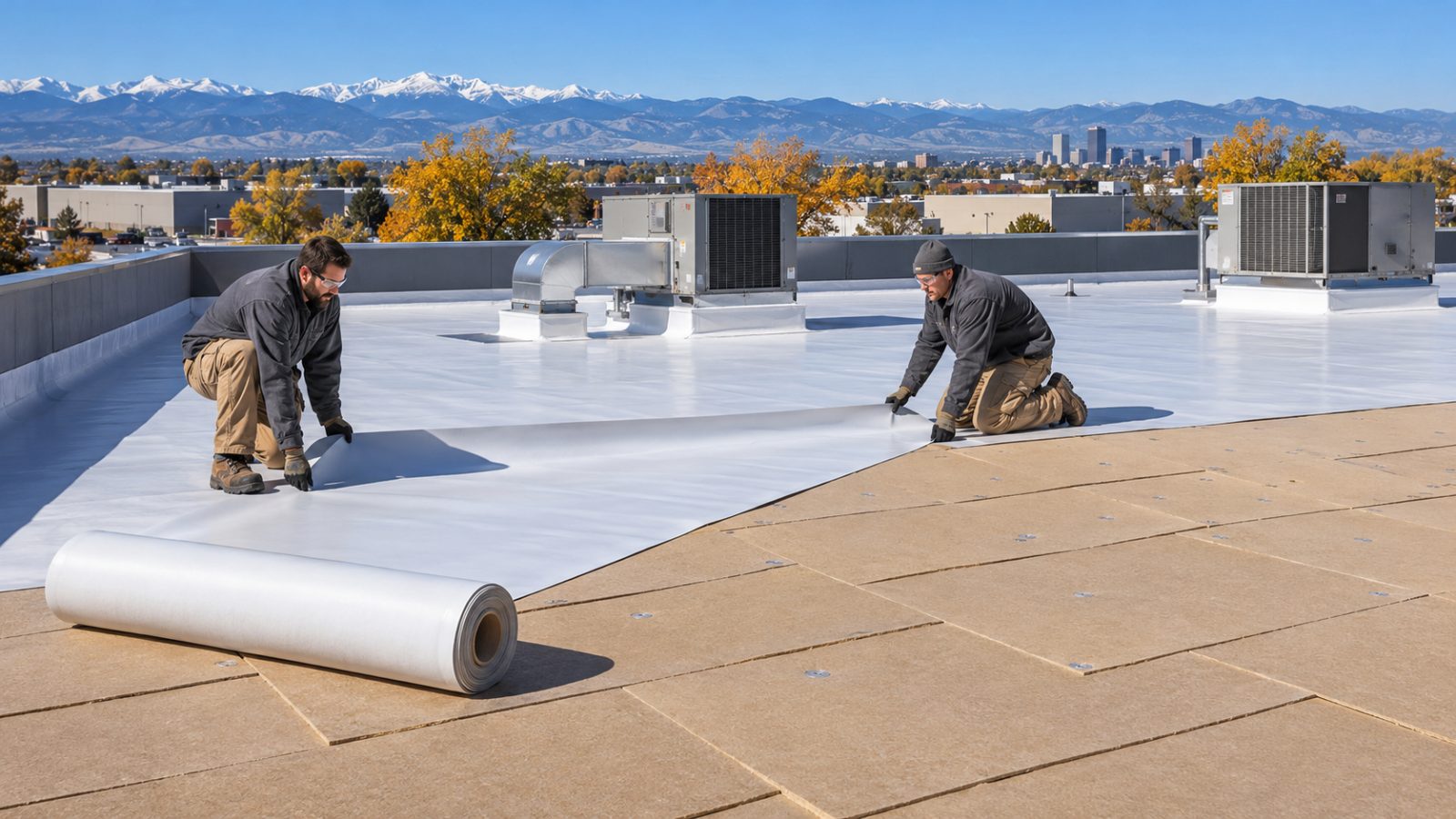
Removing deteriorated roofing materials can reveal conditions that were previously hidden, including wet insulation, damaged decking, and deteriorating flashing. These findings may influence the final replacement requirements. Whether removal is necessary depends on the existing assembly, applicable building requirements, moisture conditions, and the proposed roofing system. Covering an unsuitable existing roof can preserve problems that should be corrected.
Commercial Roofing Material Selection
Commercial roofing materials include single-ply membranes, modified bitumen, built-up systems, and metal roofing. Each has characteristics that may make it suitable for particular building designs and operating conditions. Selection should consider roof slope, rooftop traffic, weather exposure, existing construction, and compatibility with equipment and penetrations. The appropriate material is the one that fits the building's requirements rather than simply following a popular trend.
Roof Insulation and Moisture Management
Insulation contributes to the building's thermal performance and forms an important part of many commercial roofing assemblies. Moisture trapped within existing insulation can reduce performance and contribute to continued deterioration. Replacement planning should identify whether existing insulation can remain or requires removal. Insulation configuration, attachment, and moisture management must be coordinated with the new roofing materials and applicable building requirements.
Commercial Roof Drainage Improvements
Standing water can increase stress on roofing materials and reveal underlying drainage deficiencies. Replacement work provides an opportunity to evaluate roof slopes, drains, scuppers, and low areas where water collects. Depending on the building, drainage improvements may involve changes to insulation configuration or existing drainage details. Structural concerns and major drainage alterations may require additional professional evaluation.
Rooftop Equipment and Flashing Details
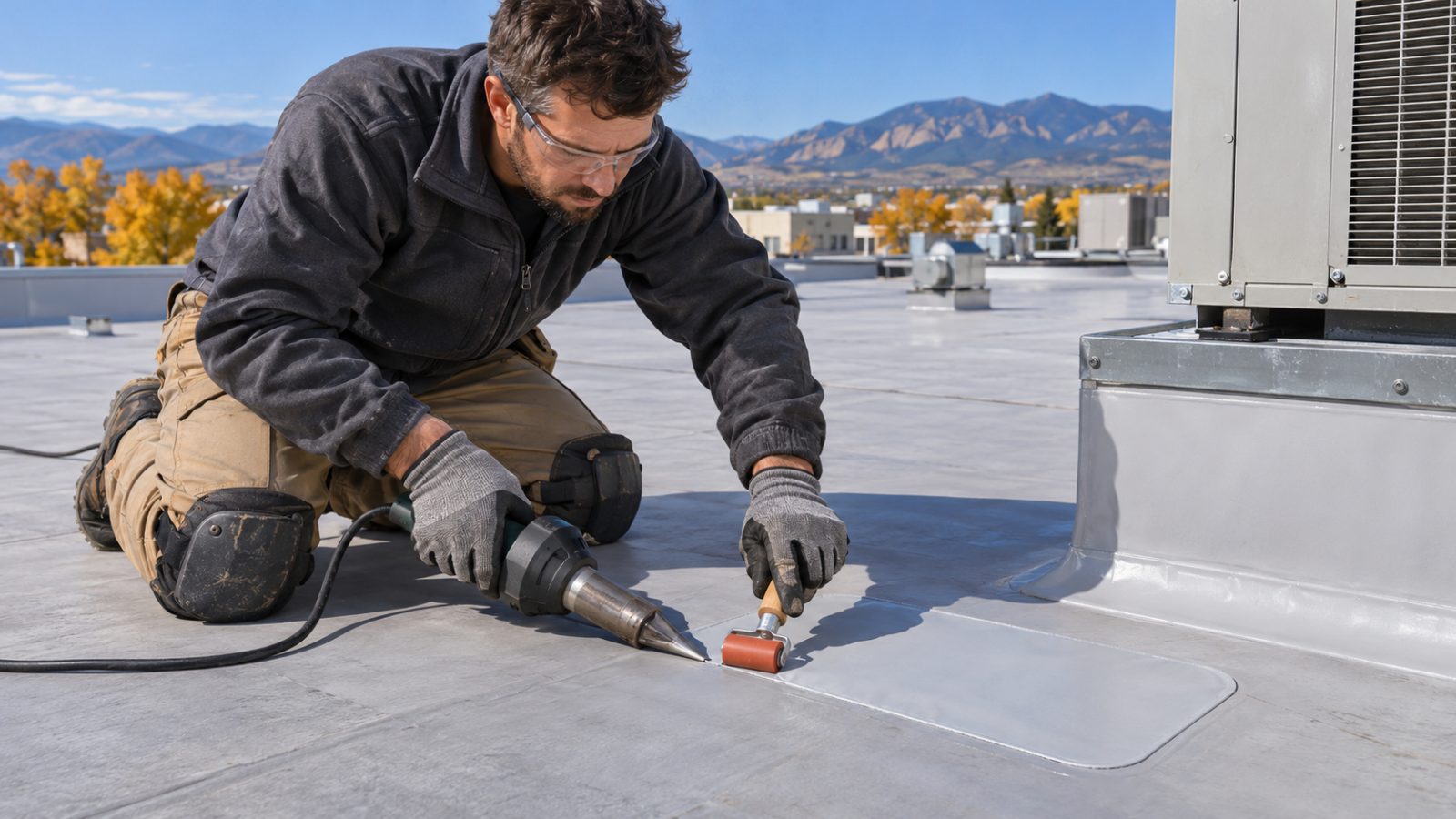
Commercial buildings frequently contain HVAC units, exhaust systems, pipes, and other roof penetrations. Each connection must be integrated into the replacement roofing system without creating vulnerable openings. Equipment access and coordination are important parts of replacement planning. Some projects may require involvement from mechanical contractors or other building specialists before roofing work can proceed.
Why Choose Us for Commercial Roof Replacement?
Building-Specific Planning
Replacement recommendations consider the existing roofing assembly and how your commercial property operates.
Attention to Hidden Conditions
We recognize the importance of insulation, decking, and moisture beneath the visible roof surface.
Practical Material Selection
Roofing options are evaluated according to building requirements and local environmental conditions.
Operational Considerations
Tenant access, rooftop equipment, and construction logistics deserve attention before replacement begins.
Discuss Your Roofing Project
If your commercial roof is experiencing repeated failures, contact us to discuss replacement options suited to your property.
Discuss scope and terms before authorizing work.
Our Commercial Roof Replacement Process
Evaluate the Existing Roof
Review the roofing system's visible condition, known leak history, and potential underlying concerns.
Determine Replacement Requirements
Consider removal needs, insulation, drainage, flashing, and applicable building requirements.
Select a Roofing Approach
Discuss compatible roofing systems and their suitability for the building.
Coordinate Project Logistics
Establish access requirements, equipment considerations, and arrangements for maintaining building operations.
Review Installation Details
The completed roofing assembly should be evaluated for proper membrane connections, flashing, and drainage details.